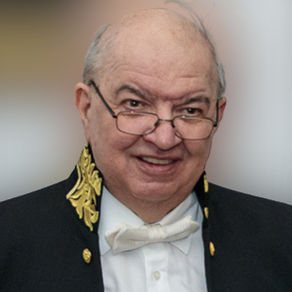
Professor Emeritus at Gheorghe Asachi Technical University of Iași

Associate Professor of English Language and Translation at the University of Salerno, Department of Political and Social Studies.
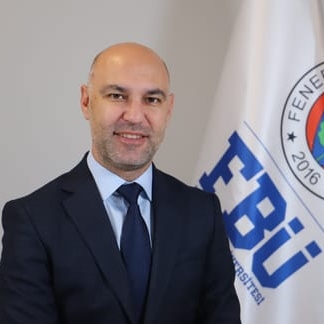
Professor of Industrial Engineering and Dean of the Faculty of Engineering and Natural Sciences at Fenerbahçe University in Istanbul
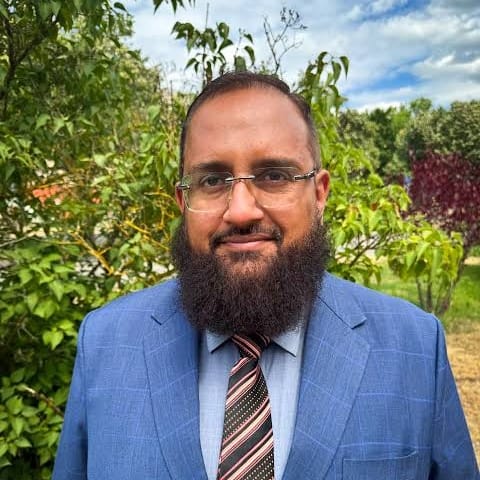
Vice President of Research and Full Professor at Gisma University of Applied Sciences, Germany
Massimo Leone is Professor of Philosophy of Communication, Cultural Semiotics, and Visual Semiotics at the Department of Philosophy and Educational Sciences, University of Turin, Italy, part-time Professor of Semiotics in the Department of Chinese Language and Literature, University of Shanghai, China, associate member of Cambridge Digital Humanities, University of Cambridge, Director of the Institute for Religious Studies at the “Bruno Kessler Foundation”, Trento, and Adjunct Professor at the University of Caracas, Venezuela He has been visiting professor at several universities in the five continents. He has single-authored fifteen books, edited more than sixty collective volumes, and published more than six hundred articles in semiotics, religious studies, and visual studies. He is the winner of a 2018 ERC Consolidator Grant and of a 2022 ERC Proof of Concept Grant. He is editor-in-chief of Lexia, the Semiotic Journal of the Center for Interdisciplinary Research on Communication, University of Turin, Italy, co-editor-in-chief of Semiotica (De Gruyter), and co-editor of the book series “I Saggi di Lexia” (Rome: Aracne), “Semiotics of Religion” (Berlin and Boston: Walter de Gruyter), and “Advances in Face Studies” (London and New York: Routledge).
ORCID ID: orcid.org/0000-0002-8144-4337
Daniel Condurache (born August 15, 1955, in Roman, Romania) is a distinguished Romanian engineer, mathematician, and Professor Emeritus at Gheorghe Asachi Technical University of Iași. He has been a Corresponding Member of the Romanian Academy since 2022 and was elected to the International Academy of Astronautics in 2026.
He holds a degree in Electronics and Telecommunications (1980) and a PhD in Engineering (1995). Throughout his academic career, he served as Head of the Department of Theoretical Mechanics (2005–2012) and Vice-Rector of Gheorghe Asachi Technical University (2012–2020).
His research interests encompass theoretical mechanics, dynamical systems, orbital mechanics, astrodynamics, robotics, and mathematical modeling. His scientific contributions include original analytical solutions in satellite orbital dynamics, robotic camera calibration, and rigid-body kinematics.
Beyond engineering and mathematics, Professor Condurache has made significant contributions to journalism and communication education, particularly through his involvement in the development of journalism studies in Iași. He has also taught communication-related disciplines at Alexandru Ioan Cuza University of Iași.
He serves as Vice-President of the Romanian Committee for the History and Philosophy of Science and Technology within the Romanian Academy and President of its Division for the History of Science.
Sinan Apak is Professor of Industrial Engineering and Dean of the Faculty of Engineering and Natural Sciences at Fenerbahçe University in Istanbul, Türkiye. He holds a BSc in Mechanical Engineering from Balıkesir University, an MSc in Systems and Industrial Engineering from Yeditepe University and a PhD in Engineering Management from Marmara University. He became an associate professor in 2017 and a full professor in 2022. Before joining Fenerbahçe University in 2024, he taught at Yeditepe, Istanbul Arel, Bahçeşehir and Maltepe universities and served as dean of engineering at Maltepe.
His research is about how organizations make decisions under uncertainty. He builds optimization, simulation and multi-criteria decision models for production and logistics systems. His recent work asks when managers should hand operational decisions to AI systems and when people should keep control. He has also co-authored studies on digital journalism and on the social effects of artificial intelligence.
He has worked as a researcher and consultant on TÜBİTAK-funded projects, co-founded the technology company LEOS Bilim Teknoloji and serves on the project evaluation boards of KOSGEB, Türkiye’s SME development agency. Outside the university he volunteers as a sea search-and-rescue boat captain.
Paola Attolino is Associate Professor of English Language and Translation at the University of Salerno, where she teaches courses in Political Science, International Relations, and Sports & Social Wellbeing Management. Her research investigates the complex intersections between language, media, and society, with particular emphasis on political discourse – recently focusing on crisis communication and security discourse from a diachronic perspective – sociolinguistics, intercultural communication and contrastive phraseology, with a specific interest in the use of anthroponyms in media and political communication. She has long explored the relationship between rap music and politics, analyzing how contemporary forms of expression shape public discourse, and examining the politics of language as embedded in the politics of race. She also studies hip hop as a powerful tool of communication and cultural resistance, and hosts a dedicated programme on Unis@und, the University of Salerno’s web radio. She has published extensively on these topics and actively promotes innovative teaching practices, including the use of serious games to enhance storytelling, communication skills, and critical thinking.
Prof. Dr. Muhammad Tanvir Afzal is Vice President of Research and Full Professor at Gisma University of Applied Sciences, Germany. As Vice President of Research, he provides strategic leadership for the university’s research centres and leads initiatives to strengthen its research culture, its output and its international partnerships.
His international academic career spans more than two decades. In that time he has held senior leadership positions including Founding Dean of Computing, Founding Campus Director, Director of Quality Enhancement and Director of Information Systems. He holds a PhD with highest distinction from Graz University of Technology, Austria, and an MSc in Computer Science, awarded with a Gold Medal, from Quaid-i-Azam University, Islamabad.
Prof. Afzal has published more than 150 research papers, which have received over 2,800 citations, with an H-index of 29 and an i10-index of 85. He served is Editor-in-Chief of the Journal of Universal Computer Science for over a decade and has supervised more than 140 research students at PhD, Master’s and undergraduate levels. He is also Principal Investigator on a major ERASMUS+ capacity-building bid that coordinates eleven international partners.
Alongside his academic work, he delivers executive training and consultancy in digital transformation, data analytics and AI-driven decision-making, and has worked with 20 international organisations to date.
Alexandru Ioan Cuza University of Iaşi is the oldest higher education institution in Romania. Since 1860, the university has been carrying on a tradition of excellence and innovation in the fields of education and research. With over 23.000 students and 742 academic staff, the university enjoys high prestige at national and international level and cooperates with 403 universities world-wide. Alexandru Ioan Cuza University is a member of some of the most important university networks and associations: the Coimbra Group, EUA – European University Association, Utrecht Network, International Association of Universities, University Agency of Francophony and the Network of Francophone Universities (RUFAC). These partnerships offer us the opportunity to experience changes, to have student and teacher mobilities and joint academic, research and strategy programmes.
Alexandru Ioan Cuza University became the first student-centered university in Romania, once the Bologna Process was implemented. We believe in the power of individual choice and customized education. Thus, we became the first Romanian university to offer students the opportunity to choose both a major and a minor field of study, in a combination at their choice, that best suits their career goals.
Research at our university is top level. In 2008, for the third year in a row, Alexandru Ioan Cuza University was placed first in the national research ranking compiled on the basis of Shanghai criteria. Our teachers are involved in over 187 national and international research projects. Striving for excellence, the university takes unique initiatives to stimulate research quality, to encourage dynamic and creative education and to involve its best students in academic life.
is an educational and research structure that aims to produce, develop and disseminate valuable knowledge about the role of professional communication in the contemporary democratic society.
Communication is what makes humans capable of the most astounding achievements: it makes art and education possible, it makes business possible, it makes it possible for people to express or hide their true thoughts, to think of legal and moral standards, to make plans for collective action. The systematic study of communication has become more necessary today, when technological developments have turned the world we inhabit in a complex and interconnected space, whose components are intensely interacting.
Our educational and research priorities envisage the following directions:
The Institute for Advanced Religious Studies and Internetworking Communication (IARSIC) is an open research structure organised around scientific journal ESSACHESS founded and directed by Dr. Stefan BRATOSIN, full Professor at the Paul Valéry University of Montpellier.
IARSIC began as an international center of applied research studies of innovations in communication. IARSIC is currently focused on working with scholars and scientific research groups from all over the world in order to develop and promote researches in religion, symbolic communication, new media and Internet through interdisciplinary cooperation.
This research structure was established in 2011 when a network of over thirty researchers from different scientific disciplines decided to join together around a research institute in order to participate in programs, projects, and research contracts in sciences involved in areas of information and communication.
Currently IARSIC involves scientists from Brazil, Colombia, France, Lebanon, Madagascar, Moldova, Morocco, Romania, Russia, Spain, Tunisia, and the United States of America.
The purpose of IARSIC is to make possible international cooperation in the fields of religion, symbolic communication, new media and Internet so that scholars and researchers from all over the world can work together in order to elaborate, accomplish, and implement the best research projects and programs involving innovation on these topics.
The mission of IARSIC is to develop, implement, and promote innovation in religion, symbolic communication, and new media and Internet.
IARSIC is governed by its members in accordance with its by laws.
UNIVERSITÉ PAUL-VALÉRY MONTPELLIER 3, ITIC, Bât. BRED, Bureau 216, Route de Mende 34 199 Montpellier Cedex 5
Gisma University of Applied Sciences (German International Graduate
School of Management and Administration) is a private, state‑recognised
institution with campuses in Potsdam and Berlin, founded in 1999. Since
joining Global University Systems in 2013, highlights include its
AMBA‑accredited Global MBA and CIM‑accredited marketing programmes. The
biz-tech university of applied sciences hosts at the moment more than
2.000 students.
Academic offering & partnerships
Gisma delivers English‑taught bachelor's degrees in Computer Science,
Data Science & AI, Software Engineering, International Business, and
more, alongside master's programmes in Digital Transformation,
International Management, and its renowned Global MBA. Its hybrid
learning model supports in‑person and online students, enriched by
international academic partnerships (e.g., Kingston University London)
enabling double degrees.
Industry integration & facilities
Located on SAP's Think Campus in Potsdam and in central Berlin, Gisma
offers modern, tech‑rich learning environments and is also strongly
connected with partners like SAP. Its Career Centre helps students build
resumes, prepare for interviews, and secure internships—resulting in 88
% of students employed before graduation and 94 % within a year; 66 %
attain managerial roles early on.
Community & graduate outcomes
With a student body drawn from over 95 nationalities, Gisma fosters
global networking. Faculty hold industry experience with organisations
like Amazon, IBM, and Bosch. Graduates become employed by top companies
(e.g., Tesla, Amazon, Bosch), earning above average starting salaries.
The University of Salerno (UNISA) is a leading public
university in southern Italy, recognized for its dynamic academic
environment, innovative research, and strong international outlook. Its
main campus – covering around 100,000 square metres – is located in
Fisciano, just outside the historic city of Salerno, in an ideal
location near the Amalfi Coast and Naples.
With roots tracing back to the Schola Medica Salernitana – the
oldest medical school in the Western world – UNISA blends tradition and
innovation across a wide range of disciplines. It offers
state-of-the-art facilities in a vibrant and inclusive setting and
serves approximately 40,000 students through undergraduate,
postgraduate, and doctoral programmes aligned with European and global
standards.
UNISA is deeply committed to international cooperation, actively
participating in Erasmus+, bilateral agreements, and global research
partnerships. Its multidisciplinary departments, dedicated research
centres, and industry collaborations position it as a key player in
academic and scientific advancement. UNISA proudly welcomes scholars,
researchers, and students from around the world to collaborate, exchange
ideas, and shape the future of knowledge together.
Department of Political and Social Studies (DISPS)
The Department of Political and Social Studies (DISPS) is firmly
committed to internationalisation, offering students and faculty members
extensive opportunities for study, teaching, and research abroad through
global partnerships.
DISPS is defined by four guiding principles:
IDENTITY
DISPS brings together diverse yet interconnected disciplines, united by
shared values and a strong humanistic, social, and scientific
foundation. Its aim is to develop a cultural project rooted in academic
excellence.
KNOWLEDGE
Embracing a multidisciplinary approach, DISPS integrates six macro-areas
– Sociology, Political Science, Economics, History, Law, and Linguistics
– across its academic programmes, which include two undergraduate
degrees, two master's degrees, one PhD programme, and two professional
master's programmes.
RELATIONSHIPS & SYNERGIES
The department fosters robust collaborations – both nationally and
internationally – with institutions, companies, associations, and
research centres. These partnerships enrich the educational experience
and stimulate high-level research.
MISSION
DISPS is dedicated to delivering high-quality education, advancing
innovative research, and engaging in meaningful public outreach, with
the goal of shaping culturally aware and socially responsible
citizens.
CLAIM: "Research, Innovation, and Relational
Spaces"
Fenerbahçe University, founded by Fenerbahçe Education, Culture, and
Health Foundation, gained its legal personality with the law published
in the Official Gazette dated 24 November 2016.
At the University, education proceeds at 7 undergraduate level faculties
in 33 departments in total and in 15 programs within the Vocational
School of Health Services. Additionally, in the Graduate Education
Institute there are 21 master’s and 2 doctorate program.
Fenerbahçe University, from the first day of its establishment, has
carried out activities which strengthen its teaching staff, increase the
number of English undergraduate and graduate programs, provide its
students with an impressive language learning opportunity both during
and post preparatory education by structuring its foreign languages
department. Fenerbahçe University guides scientific studies through its
own international periodicals in the fields of Health, Social Sciences,
and Sports Sciences as well as Architecture and Engineering. The
University has started publishing its international periodicals in the
fields of Health, Architecture and Engineering on the DergiPark
platform.
Fenerbahçe University maintains research and application activities
through the research centers of: Innovation, Technology Application and
Research Center, Cyberspace Research Application and Research Center,
Sports Research Application and Research Center, Continuing Education
Application and Research Center, Turkish Teaching Application and
Research Center, and Distance Education Application and Research Center
established within the scope of CoHE Application and Research (YÖK
UYGAR). International partnerships, project studies, and exchange
programs have become active thanks to these seven centers.
On 29 October 2021, the University has been accepted to the Erasmus+
Exchange Programs and bilateral agreements have started in this
context.
Fenerbahçe University aspires to raise individuals who are fluent in
world languages, open to innovative and creative thinking, focused on
their scientific growth, who have completed their individual, social,
and academic development, and thus, being among the leading universities
in the world.
Acting with the goal of internationalization, Fenerbahce University,
while offering education opportunities to international students, is
determinedly on the way to become an internationally respected
university by creating a learning environment that embraces
multiculturalism and diversity. In this regard, the number of
international students and teaching staff increases with each passing
day.